
You've probably seen the name Farias on a football jersey。a medical diploma, or a street sign in São Paulo. It shows up everywhere in Brazil, yet most outsiders treat it as just another Portuguese surname. That's a mistake. Farias carries a specific history and a set of practical implications—whether you're researching family roots, navigating Brazilian bureaucracy, or trying to pronounce it without sounding like a tourist.Start with the origin. Farias is a toponymic surname from the Iberian Peninsula, linked to the region of Faro in southern Portugal. The name likely evolved from 'Farias' as a plural of a local family or estate designation. What makes it practically interesting is its migration pattern. Unlike many Portuguese surnames that stayed concentrated in the north, Farias spread early to the Azores and Madeira。
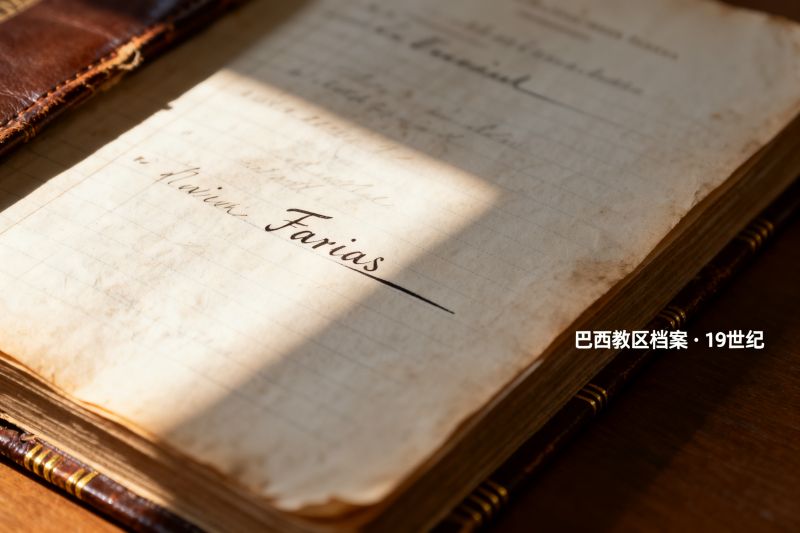
then crossed the Atlantic in the 17th and 18th centuries. You'll find dense clusters in northeastern Brazil—Ceará, Pernambuco, Bahia—and a second wave in Rio Grande do Sul. If you're tracing a Farias line, check those two regions first, not Lisbon.Pronunciation trips people up. In Brazilian Portuguese, the 'r' is a soft guttural sound, almost like an 'h' in English—so 'Farias' comes out closer to 'fah-REE-us' than 'fah-ree-ahs.' In Portugal, it's tighter, with a tapped 'r.' I once watched an American professor call a student 'Fah-REE-az' for an entire semester;the student never corrected him, which tells you something about how Farias families often just adapt. Practical tip: if you're addressing someone named Farias in Brazil。use the first name unless you're in a formal setting. The surname alone can sound stiff.Here's where it gets concrete. Brazil's naming laws allow for relatively easy surname changes, and Farias is one of the most commonly adopted surnames in paternity recognition cases. That's not trivia—it means the name has legal weight. If you're handling inheritance, citizenship applications, or notarial records involving a Farias, verify the spelling. Variants like 'Faria' (singular) and 'Farias' (plural) are legally distinct in Portuguese records。and a single 's' can send you to the wrong archive. I've seen a Rio cartório reject a document over that letter. Double-check before you file.Beyond paperwork, Farias has cultural reach. The surname shows up in samba lyrics。
in the novels of Jorge Amado, and on the roster of countless Brazilian football clubs. That visibility creates a false sense that the name is generic. In practice, Farias families often maintain tight regional networks—church records, hometown associations, even WhatsApp groups for distant cousins. If you're researching a Farias branch, start with local parish archives in Ceará or Bahia rather than national databases. The name is common, but the specific family lines are not. Treat Farias as a map key: it points you to a region, a migration route, and a set of records. Use it that way, and the research gets much easier.