
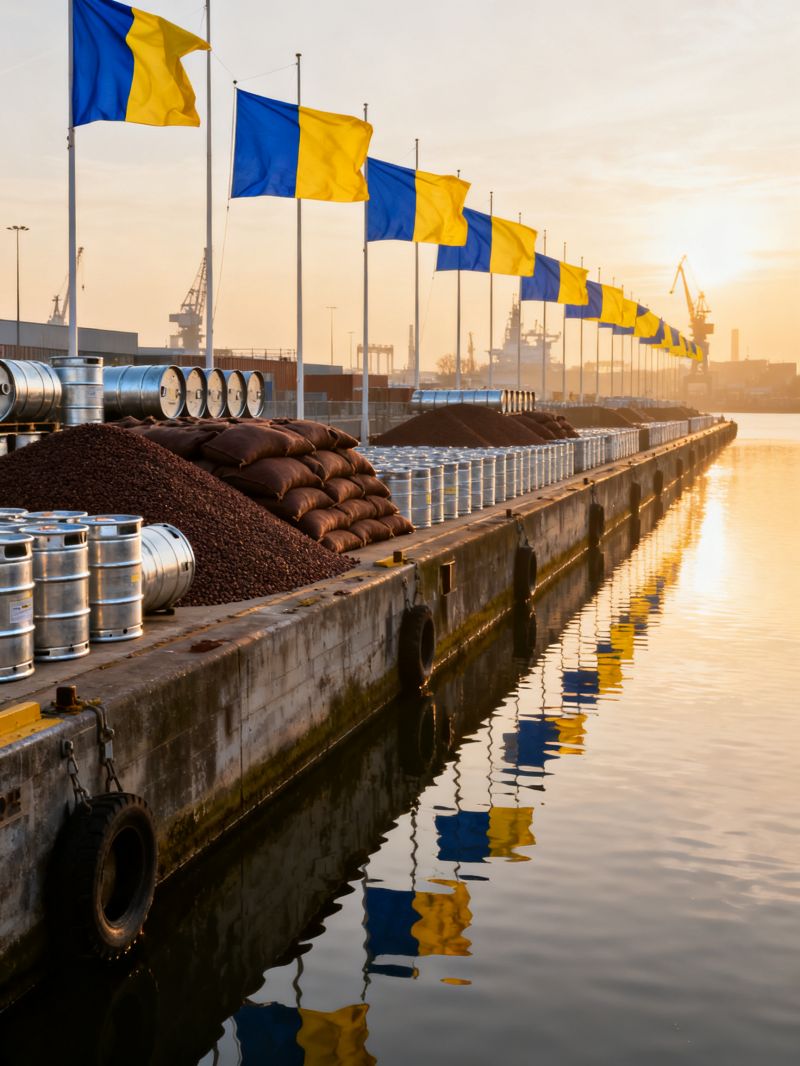
Antwerp’s quay walls tell a more precise story about Argentina Belgium trade than any diplomatic communiqué. Pallets of Argentine soybean meal。lithium carbonate in sealed drums, and wine bound for Belgian distributors move through the same port complex that handles Europe’s chemical and pharmaceutical supply chains. Belgium is small, but its ports, customs expertise, and warehouse networks make it a disproportionate gateway for Argentine exports. The relationship is not driven by sentiment. It is driven by shipping schedules, compliance paperwork, and the cold arithmetic of freight costs. On a damp morning in the port, a customs broker might handle an Argentine lithium consignment and a Belgian machinery export before lunch. Belgian agents know the difference between lithium carbonate and lithium hydroxide without checking twice. The port’s rail links to Germany and the Netherlands turn a Belgian warehouse into a European distribution point. That ordinary sequence matters more than grand declarations. Argentina Belgium commerce works because Belgium offers something Argentina needs: a compact, rule-heavy, highly connected entry point into the European Union.The European Union’s trade architecture gives Belgium unusual leverage. EU-Mercosur talks have moved in fits and starts, and Belgium’s federal system splits trade authority across regional governments. Wallonia’s 2016 stand against CETA showed how a regional parliament can freeze a national signature. Argentina Belgium negotiators therefore watch Flanders and Wallonia as closely as they watch Brussels. Argentina’s embassy in Brussels spends more time on technical files than on ceremonial events. Critical raw materials add urgency. Argentina wants to export more lithium and processed minerals;Belgium wants secure supplies for battery, chemical。
and recycling industries. The Argentina Belgium agenda is less about friendship than about risk management. Belgian officials can open doors in EU committees, but they cannot promise a single market outcome. Argentine exporters learn this quickly: a sympathetic meeting in Brussels means little without a compliant shipment in Antwerp. A provincial governor may leave with a memorandum;the exporter still needs a customs code, a laboratory report, and a buyer.Agricultural trade remains the visible layer. Argentine soy, beef, lemon concentrate, and wine reach Belgian distributors, who then move them across France, Germany, and the Netherlands. Belgian retailers impose private standards that often exceed EU law, so Argentine producers face audits on deforestation, pesticide residues。and animal welfare. A beef exporter from Santa Fe may never meet a Belgian consumer, yet a supermarket specification can reshape its production plan. A single container of lemon concentrate can be rejected for a label error, then reworked in a Belgian warehouse and sold under another brand. Argentina Belgium trade flows are therefore a channel for regulation as much as for goods. Belgian buyers like the predictability of Antwerp and Zeebrugge;Argentine suppliers like the density of onward connections. The friction is real. EU deforestation rules and carbon border measures raise costs, and small Argentine producers struggle with the documentation. Still, the commercial logic holds: Belgium is not the largest market, but it is one of the most efficient doors.
Lithium changes the tone. Argentina’s brine projects in Salta and Jujuy are expanding, and Belgian companies in cathode materials, specialty chemicals, and battery recycling see a strategic opening. Umicore’s Belgian roots and its global battery materials business make the country more than a transit point. Research centers in Leuven and Antwerp add technical depth. The Argentina Belgium conversation now includes direct lithium extraction, water use in the Andean salars, and the uncomfortable question of local processing. A Belgian chemical team might test a sample in Ghent while an Argentine provincial official negotiates royalties in Salta. Water permits and community consultations in Jujuy can delay a project longer than any trade negotiation. The bottleneck is not demand. It is permitting。infrastructure, and trust. Argentina Belgium projects need long-term contracts, not photo opportunities. Belgian firms want traceable supply;Argentine provinces want local processing. That bargain is unfinished. The country that can document its lithium cleanly will win more Belgian attention than the one that only advertises reserves.Diplomacy follows the cargo. Belgium hosts EU institutions, NATO, and a dense network of trade associations。
so Argentine delegations treat Brussels as a permanent campaign stop. Belgian development finance and port expertise also shape projects in renewable energy and logistics. The relationship has limits. Belgium is not a substitute for Germany or Spain in Argentine export strategy, and Argentina is not a priority market for most Belgian small firms. Yet the Argentina Belgium connection has a practical durability that louder partnerships often lack. It survives government changes because it is embedded in terminals, contracts, and technical standards. The 2014 World Cup match, a 1–0 Belgian win in Brasília, is a useful reminder that sport is the visible part of a relationship built on less dramatic exchanges. A football match can fill a stadium;a working trade corridor fills warehouses. The second is quieter, and more useful. Argentina Belgium ties will be judged by berth availability, lithium assays, and the next EU regulation, not by the warmth of a communiqué.