inaschiavone doesn't shout. It doesn't need to. Walk into any serious tailor's workshop in Naples, and you'll likely find a roll of it tucked behind the counter—matte, tightly woven, almost anonymous. Yet this fabric has quietly shaped the silhouette of contemporary menswear for over a decade. I first encountered Linaschiavone at a small atelier off Via Chiaia。where the master cutter refused to use anything else for his summer jackets. "It breathes without collapsing," he said, running a thumb across the cloth. That single sentence explains more than most marketing brochures ever could.The name itself is a bit of a puzzle. Linaschiavone isn't a massive mill with a glossy catalog;it's a tightly run operation rooted in Biella's weaving tradition。
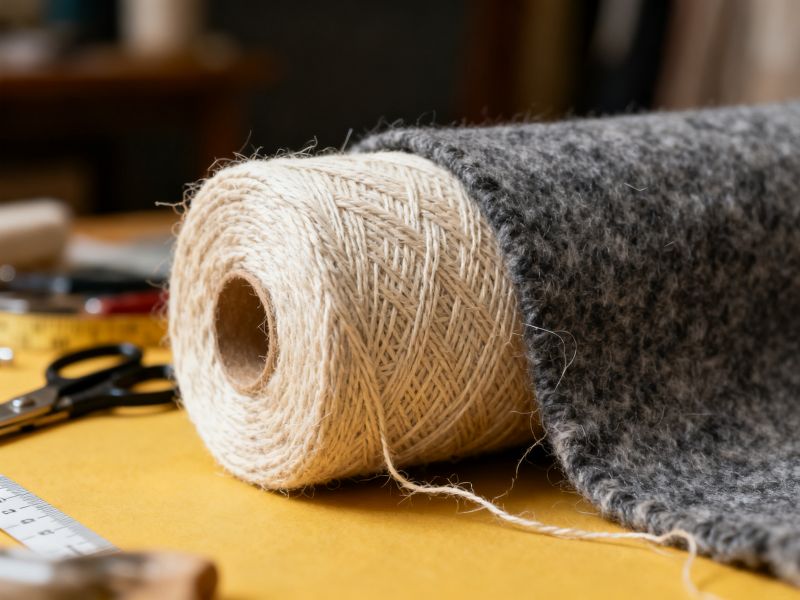
yet its identity feels almost deliberately understated. The fabric blends long-staple linen with a whisper of wool—usually around 15 percent—which gives it a springy hand and resistance to the deep creasing that plagues pure linen. In practice, that means a jacket that survives a full day of meetings and still looks intentional, not rumpled. I've worn a Linaschiavone sport coat through two humid Milanese summers;the elbows never bagged out, and the shoulders kept their line. That's not luck. It's fiber selection and tension control at the loom, the kind of detail that rarely makes it into press releases.What sets Linaschiavone apart isn't innovation in the dramatic sense. It's consistency. The yarns are dyed in small lots, which produces subtle lot-to-lot variation—a feature, not a flaw, for tailors who want character without pattern. The weave is dense enough to hold shape but open enough to let air through。a balance that cheaper linen blends consistently miss. I've compared it side-by-side with fabrics costing nearly twice as much;the Linaschiavone held its own in drape and recovery, though it's slightly drier to the touch. That dryness softens after a few wears and a gentle wash. Tailors I've spoken with in London and Tokyo mention the same thing: it presses beautifully, takes a sharp crease, and doesn't shine at the edges. For bespoke work, that reliability matters more than any trend.There's a practical side worth noting. Linaschiavone isn't delicate. It tolerates regular wear and doesn't demand the kid-glove treatment some luxury linens require. I've machine-washed a pair of trousers made from it—cold cycle, hang dry—and the fabric came back softer。with no visible distortion. That durability makes it a sensible choice for travel wardrobes, especially for people who pack light and expect garments to perform without fuss. The color palette leans earthy: stone, olive, faded indigo, a warm sand that photographs flat but looks rich in daylight. Nothing flashy. Nothing that dates. You won't find neon here, and that's precisely the point.Linaschiavone won't appeal to everyone. If you want high-sheen linen or dramatic slub textures, look elsewhere. This fabric favors restraint—tailored lines, clean finishing, a slightly dry surface that ages gracefully. In an industry chasing novelty, that quiet stubbornness feels almost radical. The mills that produce it aren't chasing volume;
they're protecting a method. For tailors and wearers alike, that's the real value: a fabric that disappears into the garment and lets the cut do the talking. After years of watching trends cycle through。I'd argue that's the highest compliment cloth can earn.