n the sprawling industrial parks of Shenzhen, where billboards scream innovation and factory floors hum with robotic arms, Ye Jingguang remains largely unknown outside a tight circle of engineers and supply-chain managers. Yet his fingerprints are on the aluminum chassis of at least three flagship smartphone models released between 2021 and 2023. As the founder of a mid-sized CNC machining firm, Ye doesn't give many interviews. When he does, he talks about tolerances, not trends. "A 0.02-millimeter deviation。" he told me over tea in his office, "is the difference between a phone that feels solid and one that feels like a toy." That obsession with the invisible has made his company a quiet gatekeeper for hardware brands that can't afford visible flaws.Ye's path into manufacturing wasn't a straight line. He studied mechanical engineering in Harbin, then spent six years at a state-owned aerospace supplier before moving south in 2008. "I got tired of making parts that never left the blueprint stage," he says with a dry laugh. His first workshop had four second-hand CNC machines and a leaky roof. The turning point came in 2012, when a major Android brand needed a supplier that could mill unibody frames at scale. Ye's team delivered a prototype in eleven days—three days ahead of schedule. That contract still accounts for roughly 30% of his revenue today. He won't name the brand。
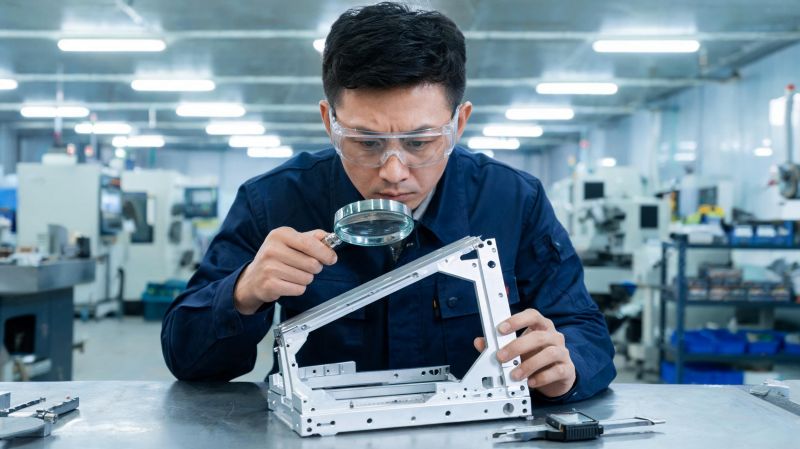
but a former colleague confirms the partnership.What sets Ye apart is his refusal to chase low-margin volume. While competitors flock to high-throughput contracts for plastic enclosures。he invests in five-axis machining centers and automated inspection lines. In 2021, he spent nearly $2 million on a Zeiss coordinate measuring machine—a purchase that made his finance director wince. "Ye Jingguang doesn't buy equipment to impress clients," says Liu Wei, a process engineer who has worked with him for eight years. "He buys it because he can't sleep if a batch ships with a tolerance drift." That stubbornness has limits. His firm declined a contract for a budget phone line last year, citing "impossible margins and unrealistic deadlines." The client moved to Vietnam. Ye shrugs: "I'd rather lose a deal than lose a reputation."The broader manufacturing ecosystem is shifting, and Ye feels it. Labor costs in Shenzhen have climbed steadily, and younger workers rarely stay on the floor for more than two years. He's responded by automating post-processing steps—deburring, polishing, final inspection—that once required a dozen hands. A new night shift runs with just three technicians and a fleet of collaborative robots. Still, he resists full lights-out production. "Some judgment calls need eyes and hands," he says, pointing to a rack of parts flagged for manual review. "Software doesn't notice when a tool starts singing." That blend of automation and human intuition defines his operation, and it's why his defect rate hovers near 0.3%。well below the industry average.
Ye Jingguang isn't a celebrity CEO or a keynote speaker at trade shows. He's the kind of figure the supply chain depends on but rarely celebrates—a detail-oriented operator who treats consistency as a moral virtue. His company employs 140 people, most of whom he knows by name. He still walks the floor every morning, coffee in hand, pausing to run a thumb along freshly milled edges. "You can't inspect quality into a part," he says, quoting an old mentor. "You have to build it in." For the brands that rely on his shop, that philosophy is worth more than any marketing slogan. It's the reason their devices feel right in your hand。even if you never know who made the frame.